

September 1, 2026 | By: Alfares International Tents
Navigating Building Codes for Tents and Temporary Structures in the GCC
Planning an event with tents or temporary structures in the GCC requires more than good design. Safety compliance is a must, especially in regions like the UAE, Saudi Arabia, and other Gulf countries where wind, heat, and fire safety standards are strictly regulated.
Understanding local building codes helps ensure your event runs smoothly, avoids penalties, and keeps guests safe from setup to takedown.
What are Building Codes?
Building codes are the official rules, regulations, and technical standards established by governments or regulatory authorities to ensure that buildings and structures are safe, structurally sound, accessible, and fit for their intended use.
For tents and temporary structures, building codes typically specify requirements such as:
- Structural design and engineering
- Wind load and weather resistance
- Fire safety and flame-retardant materials
- Electrical installations
- Emergency exits and evacuation routes
- Occupancy limits
- Accessibility requirements
- Foundation or anchoring systems
- Inspection and permit requirements
Why Building Codes Matter for Temporary Tents
Building codes exist to make sure temporary structures can handle environmental conditions such as strong winds, heat exposure, and operational load. In the GCC, approvals are often guided by civil defense authorities and municipal regulations, especially for large-scale installations.
Larger tents or event structures usually require stricter approvals, engineering documentation, and fire safety compliance before installation.
Key Safety and Structural Requirements
Wind Load and Structural Stability
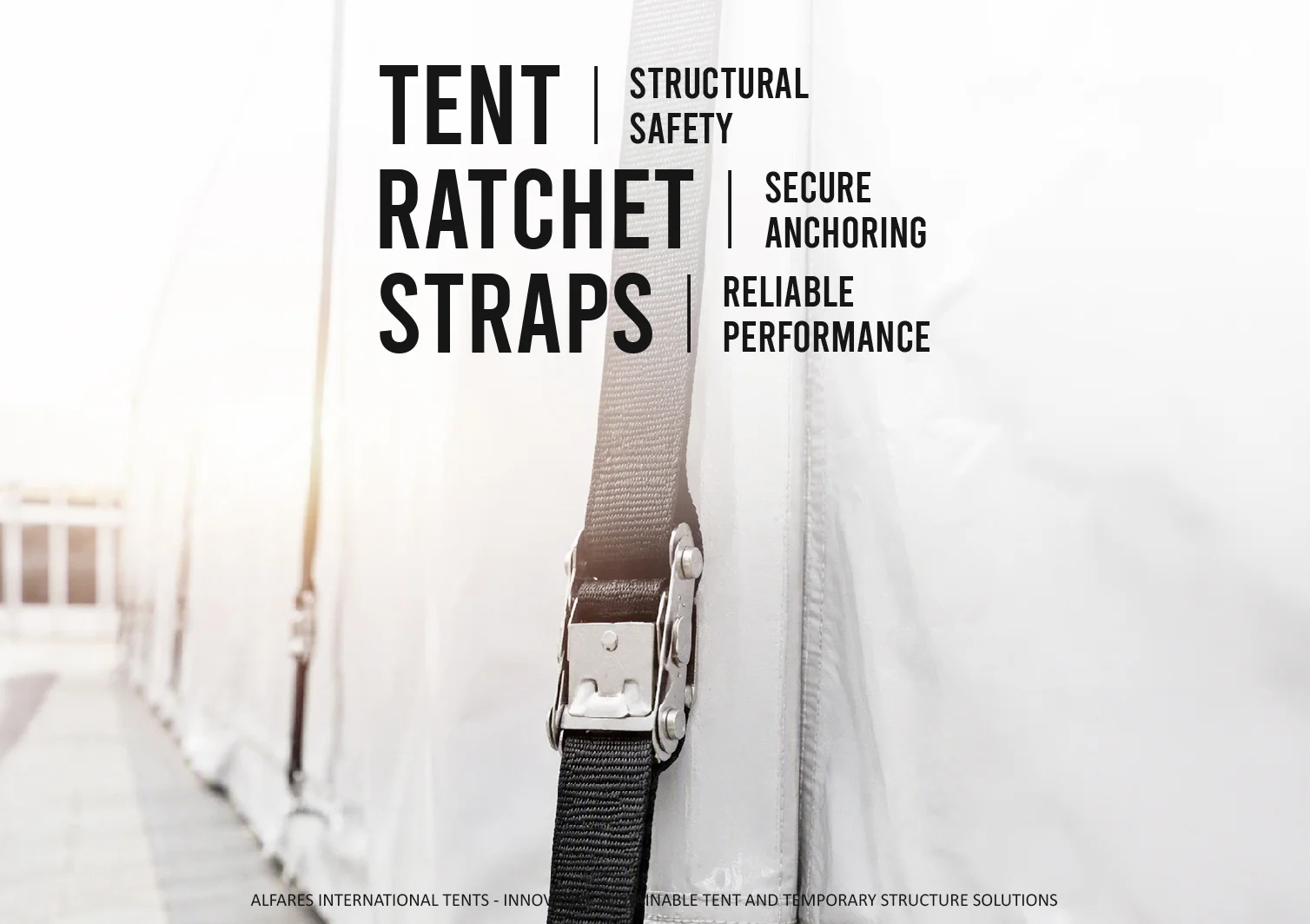
Wind conditions in open desert or coastal GCC areas can change quickly. Tent structures must be engineered for local wind loads, with proper framing, bracing, and anchoring systems to ensure stability.
Fire Safety Compliance
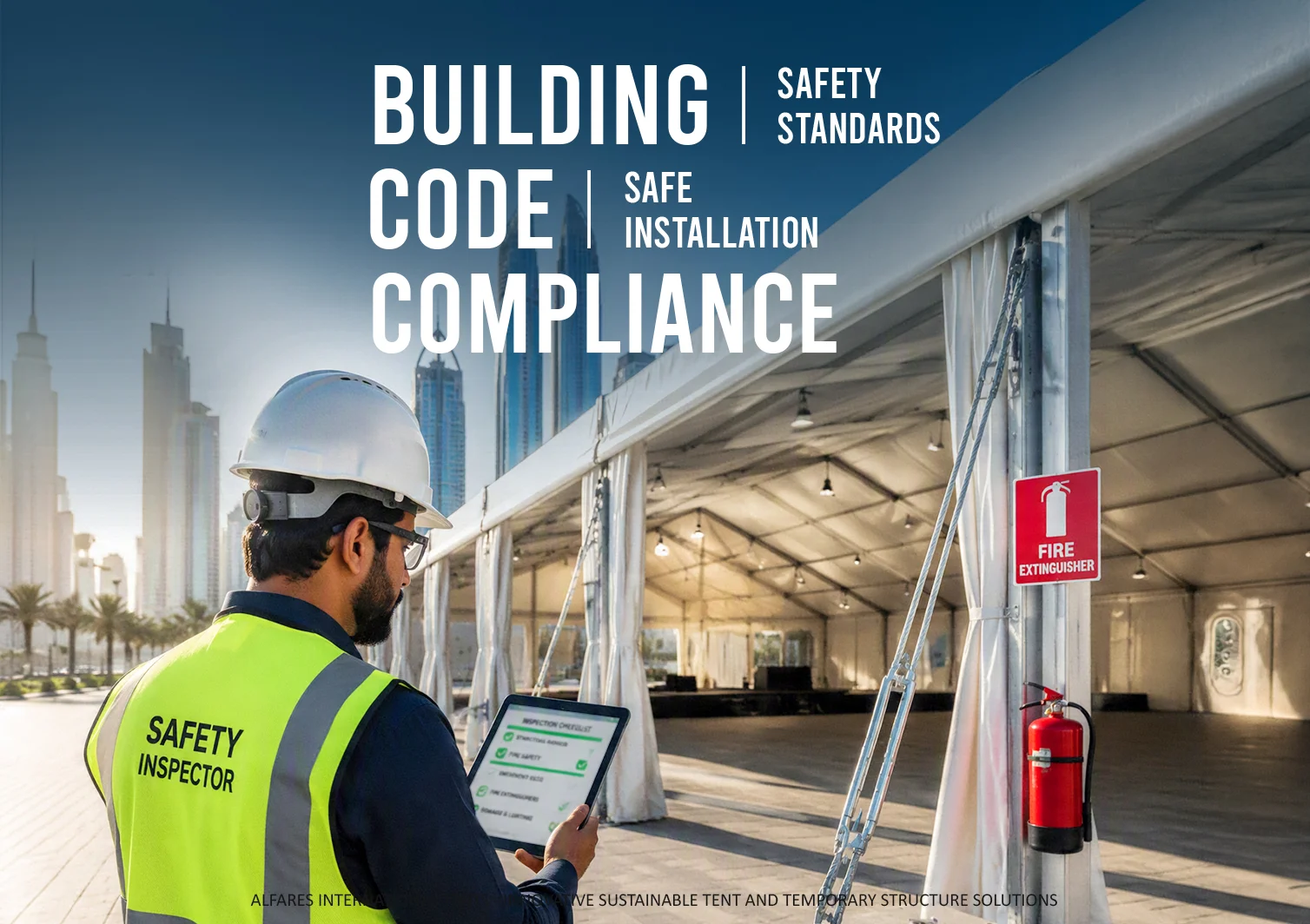
Most GCC authorities require fire-retardant fabrics and compliant materials tested under international standards. Clear emergency exits, signage, and safe evacuation routes are also essential.
Access and Egress Design
Tent layouts must allow smooth entry and exit flow. Wide doors, unobstructed pathways, and accessibility for all guests, including disabled access, are often mandatory requirements.
Engineering Certification
For medium to large installations, structural drawings and engineer-stamped calculations may be required to obtain permits. This ensures the tent is safe for occupancy under expected loads.
Permits and Local Approvals in the GCC
Each GCC country has its own approval process, but the general steps remain similar:
- Review municipal or civil defense requirements
- Apply for installation permits for large structures
- Submit engineering drawings if required
- Schedule on-site inspections before opening
Skipping these steps can lead to delays, fines, or forced dismantling.
Common Challenges in GCC Compliance
Changing regulations: Requirements can vary between emirates or cities
High heat conditions: Materials must be UV-resistant and heat-tested
Fire safety costs: Additional systems may increase project budgets
Working with experienced suppliers helps reduce these risks significantly.
Why Compliance is Essential
Non-compliant tents can lead to serious issues such as safety risks, insurance problems, or event shutdowns. On the other hand, properly certified structures ensure smoother approvals and a more professional event execution.
For event planners in the GCC, compliance is not just a requirement, it is part of delivering a reliable and safe experience.
- Work with experienced GCC tent suppliers
- Always request fire and wind certifications
- Ensure designs are reviewed by qualified engineers
- Plan approvals early to avoid last-minute delays
In the GCC event industry, successful tent installation depends on balancing design, safety, and regulatory compliance. With the right planning and certified structures, temporary spaces can perform safely and efficiently in even the most demanding environments.
Conclusion
Building codes are an essential part of every temporary structure project. From structural engineering and wind resistance to fire safety and professional installation, every requirement contributes to creating safe and reliable spaces.
By partnering with Alfares International Tents & Construction Metal LLC, clients receive engineered temporary structures that combine international quality standards, long service life, and dependable performance for projects of every scale.
Call: +971 54 400 2658
Email: info@alfaresintl.com
Explore more: https://alfarestents.com/en/structures