العربية

November 6, 2026 | By: Alfares International Tents
What Are the Key Features of Custom Tents?
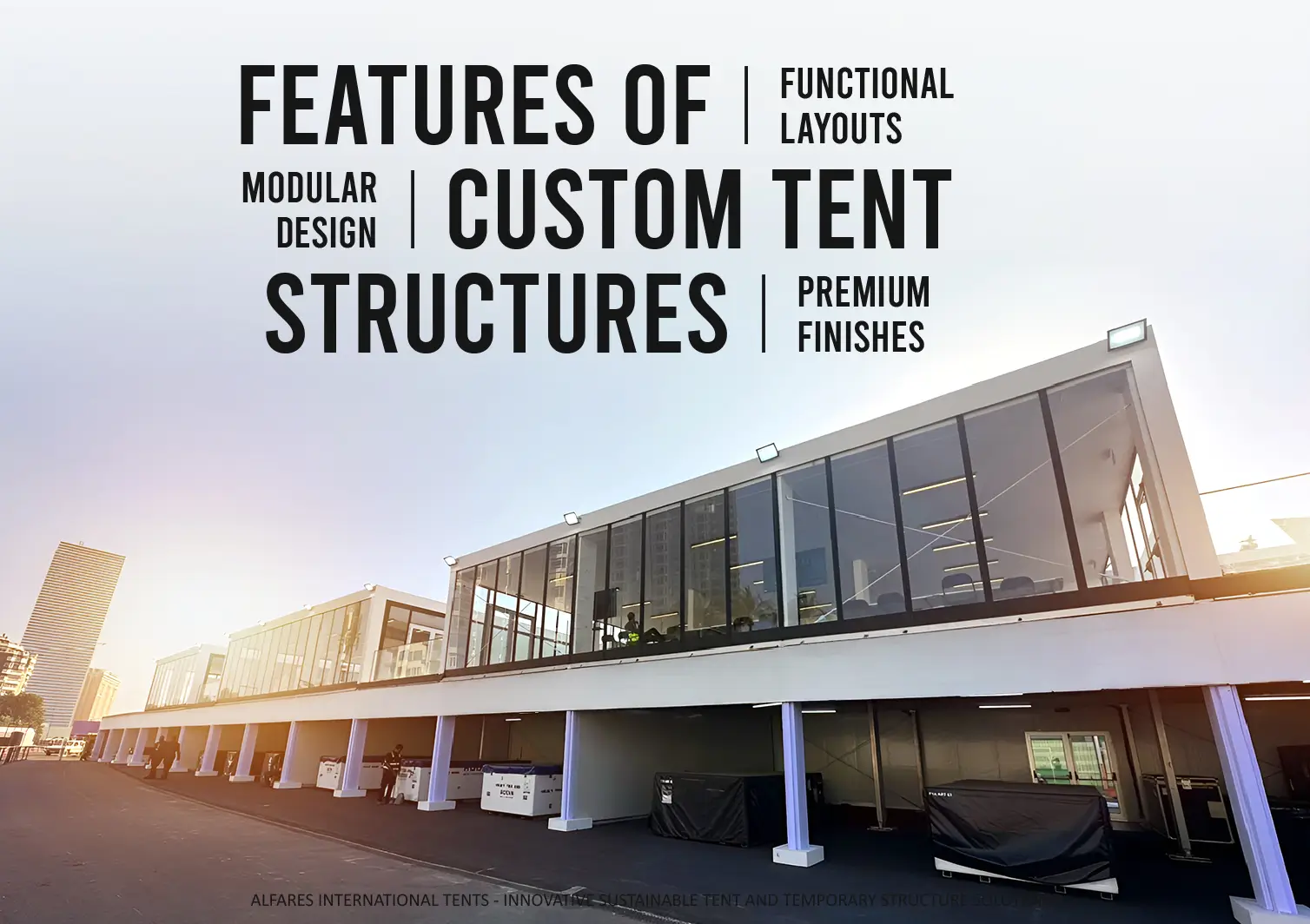
Every project has different requirements for space, functionality, appearance, and performance. A wedding venue may need an elegant covered setting, an exhibition may require open interiors and prominent branding, while an industrial facility may prioritize durability and efficient space utilization.
Custom tent structures address these varying demands through adaptable dimensions, engineered configurations, material selection, and integrated features. Rather than working around a standard design, businesses can develop a structure that aligns with their site conditions, operational objectives, and budget.
Dimensions That Fit Your Space
One of the main advantages of custom tent structures is the ability to determine dimensions according to the project. Available spans can range from compact installations to large-scale clear-span structures, with specialized designs developed for wider coverage where engineering conditions permit.
Length can also be adjusted to suit the available footprint and required capacity. Modular systems allow compatible sections to be connected or extended, providing flexibility for projects that may need additional space in the future.
This adaptability makes custom tents suitable for exhibition halls, hospitality venues, temporary warehouses, sporting events, and other applications where efficient space planning is essential.
Structural Designs with Distinctive Profiles
The shape of a tent influences both its appearance and practical performance. Depending on the intended application, custom structures can incorporate traditional gable roofs, curved profiles, arched configurations, or distinctive geometric forms.
Each design offers different possibilities for architectural expression, internal clearance, drainage, and integration with surrounding facilities. The appropriate configuration depends on the required span, site conditions, visual objectives, and structural design criteria.
For branded events and premium hospitality environments, a distinctive roofline can also help establish a recognizable visual identity while maintaining the functionality required for the space.
Materials Selected for Performance
Material selection is an important part of developing a reliable custom tent structure. Aluminium and steel frames offer different characteristics in terms of weight, strength, fabrication, transportation, and installation requirements.
Roofing and wall systems can also be selected according to the intended application. PVC-coated fabrics, transparent panels, glass, and other compatible materials can provide different levels of weather protection, visibility, insulation, and aesthetic appeal.
Depending on the specification, fabric coverings may incorporate properties such as water resistance, UV protection, and fire-retardant performance. Material selection should reflect the project’s environmental exposure, applicable safety requirements, expected service life, and maintenance needs.
Sound engineering, suitable connections, and appropriate anchoring systems remain essential to overall structural performance.
Functional Features Beyond the Frame
A custom tent can be developed as a complete usable environment rather than simply a covered area. Depending on the design, additional features may include:
- Access Systems: Doors, entry points, and loading openings.
- Wall Configurations: Solid panels, transparent sections, or removable sides.
- Climate Control: Air conditioning and ventilation provisions.
- Flooring Solutions: Raised floors or suitable finished surfaces.
- Lighting Systems: Integrated lighting for operational and decorative purposes.
- Interior Fit-Out: Stages, seating, partitions, and furniture.
- Glazed Facades: Glass installations for visibility and a premium finish.
- Utility Integration: Electrical and other services planned around the intended use.
These features can be coordinated during the design stage to support efficient installation and create a space that meets the project’s practical requirements.
Branding and Appearance That Reflect Your Business
For exhibitions, product launches, corporate functions, and promotional events, the appearance of a tent can be as important as its dimensions. Customization allows the structure to reflect a company’s identity or the theme of an occasion.
Options may include selected fabric colors, printed logos, branded valances, decorative lighting, and coordinated interior finishes. Glass facades and carefully planned entrances can further enhance the presentation of premium event spaces.
By combining structural design with visual customization, businesses can create environments that support both operational needs and brand communication.
Modular Flexibility for Changing Requirements
Project requirements may evolve as businesses grow or event plans change. Modular tent structures can offer the flexibility to extend, reconfigure, dismantle, or relocate compatible components when circumstances require it.
This can be particularly useful for recurring exhibitions, seasonal hospitality operations, temporary storage, and projects where covered space must adapt to changing demand.
Any extension or modification should be reviewed by qualified structural professionals to confirm compatibility with the original design, connections, foundations, and applicable loading requirements.
Where Can Custom Tent Structures Be Used?
The versatility of custom tent solutions makes them suitable for a broad range of applications, including:
- Exhibitions and trade shows
- Weddings and corporate events
- VIP hospitality and sporting events
- Industrial storage and temporary warehouses
- Outdoor dining and hospitality facilities
- Product launches and brand activations
- Temporary operational and support facilities
Each application can be planned around its specific capacity, access, environmental conditions, and functional requirements.
Build a Structure Around Your Vision
The defining feature of a custom tent is its adaptability. Dimensions, structural configurations, materials, integrated facilities, and visual finishes can be coordinated to create a solution suited to the demands of a particular project.
Alfares International Tents provides customized tent and structural solutions for a wide range of applications, combining project-specific planning with structural design, manufacturing, and installation capabilities.
Planning a custom tent for your next project? Contact Alfares International Tents to discuss your space requirements and explore a solution tailored to your objectives.
Call: +971 54 400 2658
Email: info@alfaresintl.com
Explore more: https://alfarestents.com/en/structures
Delivering Projects with
Innovative Sustainable Solutions
From concept to completion – Our temporary structures deliver beyond expectations across industries. Request a free consultation and discover the smarter way to build your perfect tent solution.

Alfares International Tents is a top manufacturer and supplier of temporary structures in the Middle East, offering tent and marquee rentals and sales.