November 20, 2026 | By: Alfares International Tents
How Are Large Tent Structures Installed?
Large tent structures provide extensive covered spaces for exhibitions, sporting events, industrial operations, hospitality facilities, and temporary projects. However, installing a large structure requires careful coordination, accurate positioning, and a well-planned assembly process.
Unlike conventional construction, many modular tent systems are manufactured as prefabricated components. These components are prepared at the production facility, transported to the project site, and assembled according to approved structural drawings. This approach helps organize the installation process and reduces the need for extensive on-site fabrication.
At Alfares International Tents, large tent installations involve several coordinated stages, from initial site preparation to the installation of the final covering materials.
1. Prepare and Mark the Installation Area
Before assembling the structure, the installation area must be prepared according to the project layout and foundation requirements.
The first step involves reviewing the approved drawings and identifying the exact positions of the base plates. These locations are then marked on the ground to establish the structure’s dimensions, alignment, and positioning.
Ground levels, soil conditions, drainage, and access for installation equipment should also be assessed. Once the layout has been verified, the required foundation or anchoring arrangements can be completed according to the structural design.
Accurate positioning at this stage is essential because even minor alignment errors can affect the connection of subsequent structural components.
2. Assemble the Main Frame Components
Once the base locations are ready, the primary frame components can be arranged on a suitable, level assembly area.
Roof beams, connection plates, columns, and other structural elements are positioned according to the assembly drawings. The components are then connected using the specified bolts, fittings, and connection systems.
Where the design allows, individual frame sections are assembled at ground level before being raised into position. This method provides better access to connection points and helps organize the installation sequence.
All connections should be checked against the manufacturer’s specifications before lifting operations begin.
3. Install Supports and Structural Connections
With the main frame sections assembled, additional supports and connection components are installed to establish the required structural configuration.
Gable supports, base connections, and other specified fittings are secured to their designated positions. Columns and supporting members must be checked for alignment, vertical positioning, and correct connection details.
The base plates are then fixed using the approved anchoring or foundation system. Proper alignment and secure connections are important for maintaining the intended structural geometry throughout the installation process.
4. Raise the Frames and Connect Structural Bays
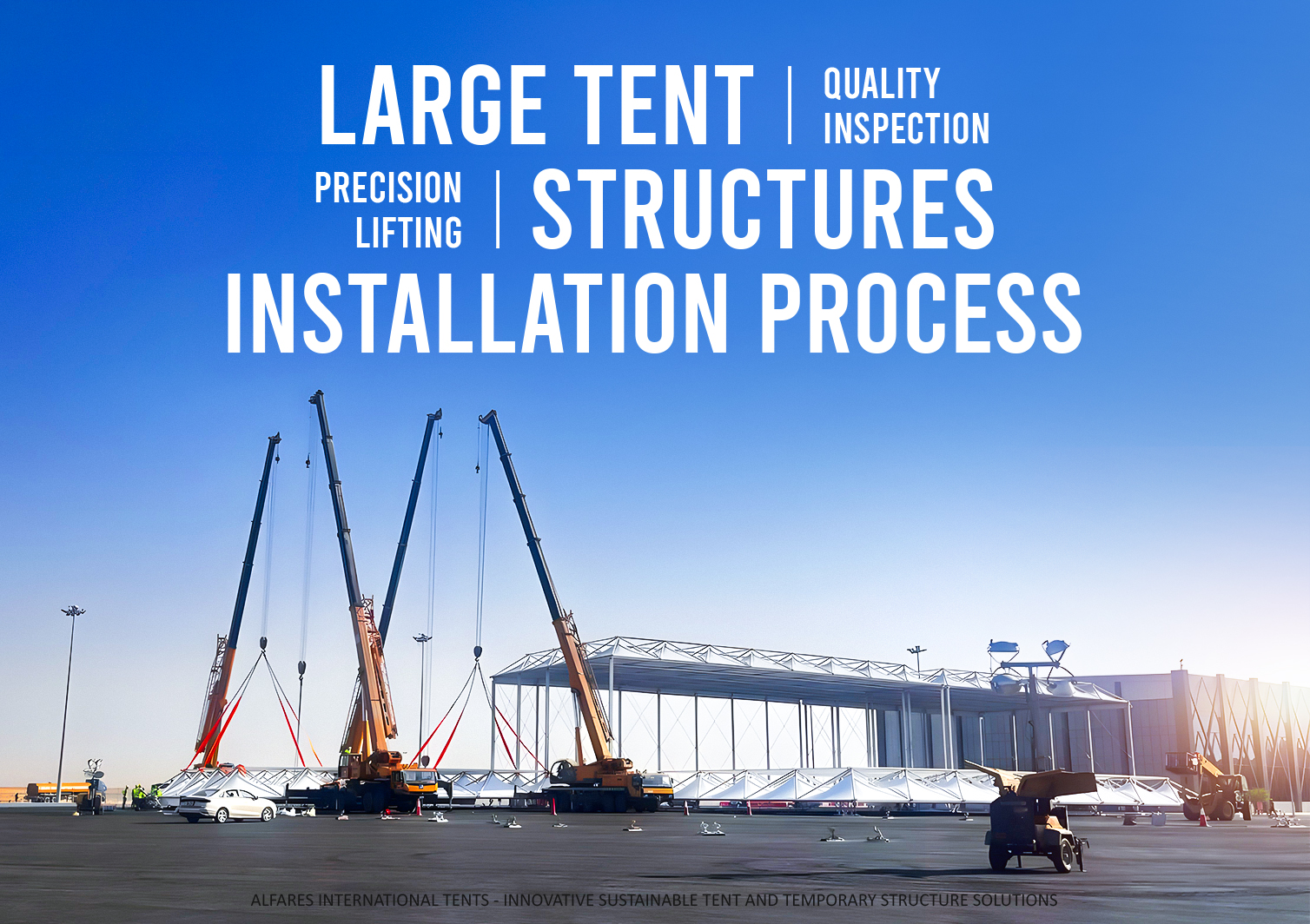
Lifting the assembled frames into position is one of the most important stages of large tent installation. Depending on the structure’s dimensions and weight, suitable cranes, lifting equipment, and access platforms may be required.
The first frame is carefully raised and temporarily stabilized. Additional structural members, such as purlins, roof bracing, and cross connections, are installed according to the approved sequence.
Subsequent frames are then lifted and connected to create the required number of structural bays. Each section must be aligned and secured before progressing to the next stage.
Temporary bracing and stabilization measures are essential during erection. Lifting operations must be carried out by qualified personnel using suitable equipment and approved procedures.
5. Install Roofing and Side Coverings
After the main structural framework has been assembled and inspected, the roofing and wall covering systems can be installed.
For systems using keder connections, the fabric edges are inserted into the designated grooves along the structural profiles. Roof coverings, gable sections, and sidewalls are positioned and tensioned according to the manufacturer’s installation requirements.
Additional tensioning components and fastening accessories are installed to secure the covering system and achieve the required finish.
Depending on the project specification, this stage may also include the installation of doors, windows, ventilation openings, and other integrated features.
6. Complete Structural Inspections and Final Checks
Completing the assembly does not mean the structure is immediately ready for use. A final inspection is necessary to verify that all components have been installed correctly.
The inspection should cover:
- Frame Alignment: Confirming the positioning and alignment of structural members.
- Connection Security: Checking bolts, fittings, and designated connection points.
- Anchoring Systems: Verifying that foundations and anchoring arrangements meet the approved specifications.
- Structural Bracing: Inspecting the installed support and stabilization components.
- Fabric Tensioning: Ensuring that roof and side coverings are correctly fitted.
- Safety Compliance: Confirming that the installation meets applicable project and safety requirements.
Any identified issues should be addressed before the structure is handed over for operation.
Essential Safety Considerations During Installation
Large tent installation involves working with heavy structural components, lifting equipment, and elevated work areas. A controlled installation process is therefore essential for protecting workers and maintaining site safety.
The installation team should use appropriate personal protective equipment, including safety helmets, protective footwear, gloves, and fall-protection equipment where required.
Cranes, forklifts, aerial work platforms, and other machinery must be operated by qualified personnel. Weather conditions, particularly wind speeds, should also be monitored before and during lifting activities.
Most importantly, large tent structures should be installed under the supervision of experienced professionals following approved engineering drawings, method statements, and manufacturer guidelines.
Professional Installation for Large-Scale Projects
Installing a large tent structure involves more than connecting prefabricated components. Each stage requires accurate planning, suitable equipment, technical coordination, and careful inspection to ensure the completed structure meets its intended requirements.
Alfares International Tents provides engineered tent and structural solutions for exhibitions, sporting events, hospitality, industrial facilities, and other large-scale applications. With manufacturing, structural design, and installation capabilities, projects can be coordinated from initial planning through on-site assembly.
Planning a large tent installation? Contact Alfares International Tents to discuss your project dimensions, site requirements, and installation needs.
Call: +971 54 400 2658
Email: info@alfaresintl.com
Explore more: https://alfarestents.com/en/structures